Login
Login Register
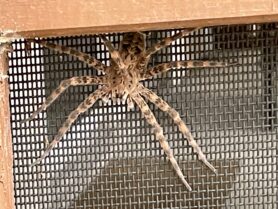
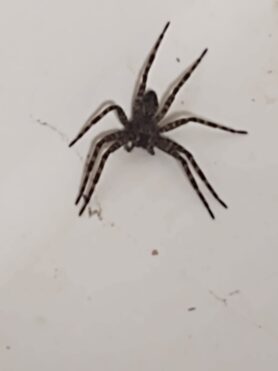
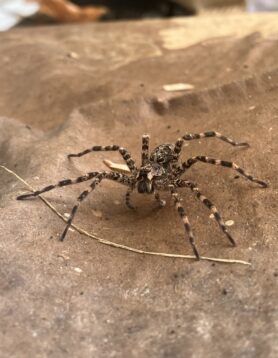
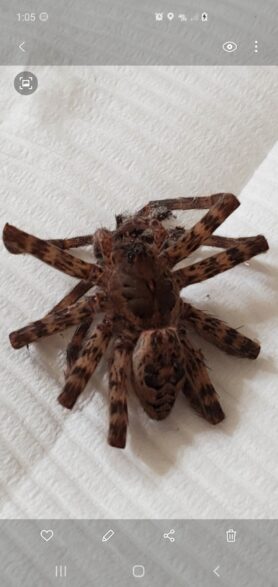
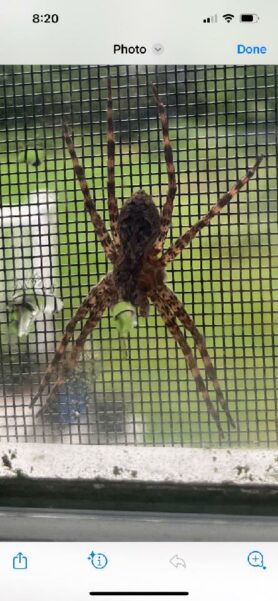
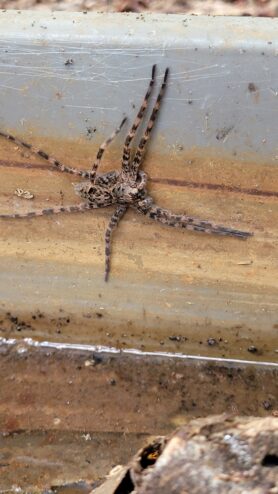
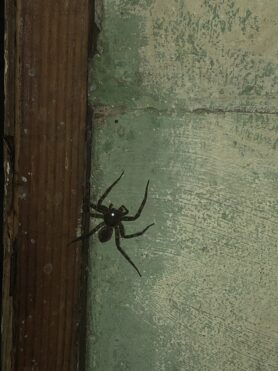
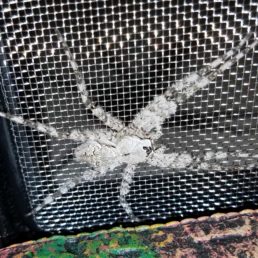
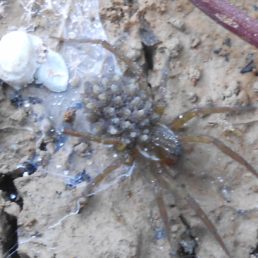
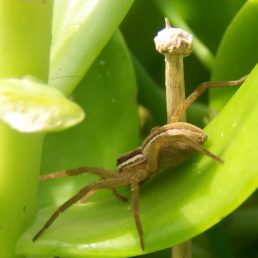
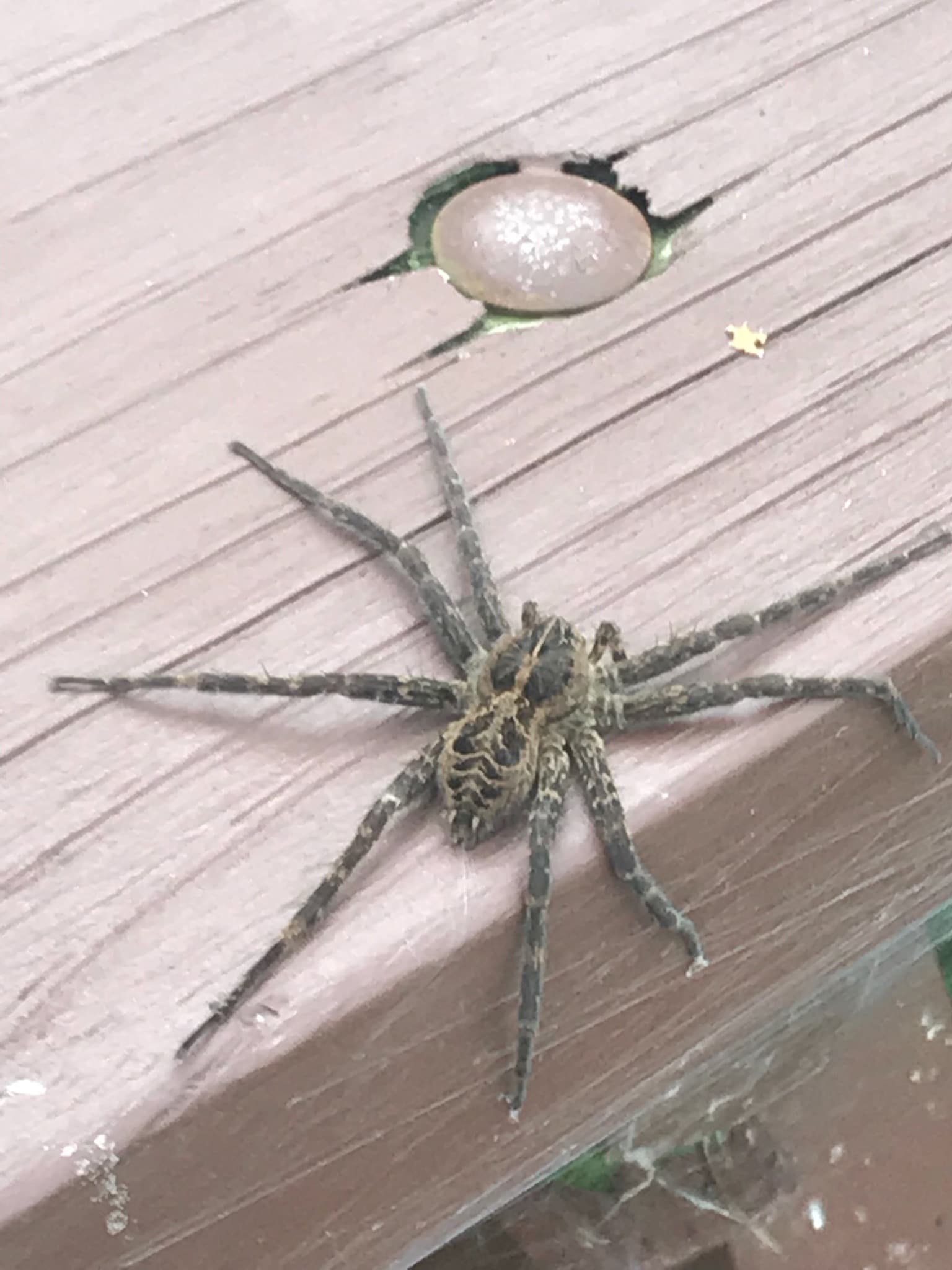
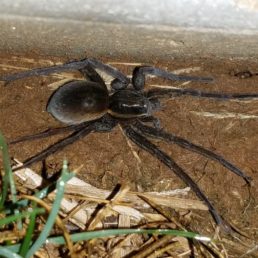
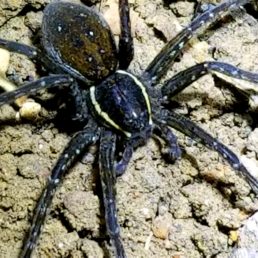
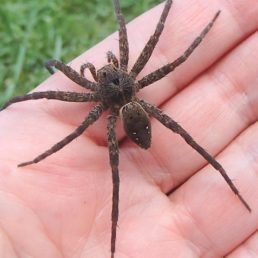
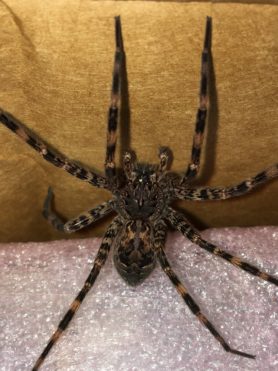 The spider species Dolomedes tenebrosus, commonly known as Dark Fishing Spider, belongs to the genus Dolomedes, in the family Pisauridae. Dolomedes tenebrosus spiders have been sighted
 Taxonomic Hierarchy
- Kingdom: Animalia
- Phylum: Arthropoda
- Class: Arachnida
- Order: Araneae
- Suborder: Araneomorphae
- Family: Pisauridae
- Genus: Dolomedes
- Species: Dolomedes tenebrosus
Other Common Names
Dark Fishing Spider, Nursery Web Spider, Raft Spider, Dock Spider
Author
Nicholas Marcellus Hentz, 1844
Primary Colors
Sightings Overview
There have been 266 confirmed sightings of Dolomedes tenebrosus (Dark Fishing Spider), with the most recent sighting submitted on April 14, 2024 by Spider ID member robntn. The detailed statistics below may not utilize the complete dataset of 266 sightings because of certain Dolomedes tenebrosus sightings reporting incomplete data.
- Web: 6% of the time, Dolomedes tenebrosus spiders are sighted in a spider web (Sample size: 266)
- Sex: 2 female and 9 male.
- Environment: Dolomedes tenebrosus has been sighted 151 times outdoors, and 141 times indoors.
- Outdoors: Man-made structure (88). Low foliage (3). High foliage (9). Ground layer (16). Under rock or debris (17). Freshwater river, lake, stream (5). Open field, pasture, grassland (1). Forest (12).
Location and Range
Dolomedes tenebrosus (Dark Fishing Spider) has been sighted in the following countries: Canada, Pakistan, United States.
Dolomedes tenebrosus has also been sighted in the following states: Alabama, Arkansas, Connecticut, Delaware, Georgia, Illinois, Indiana, Iowa, Kentucky, Louisiana, Maine, Maryland, Massachusetts, Michigan, Minnesota, Mississippi, Missouri, Nebraska, New Hampshire, New Jersey, New York, North Carolina, Ohio, Pennsylvania, Rhode Island, South Carolina, Tennessee, Texas, Vermont, Virginia, West Virginia, Wisconsin.
Seasonality
Dolomedes tenebrosus has been primarily sighted during the month of May.
- January: 3
- February: 3
- March: 15
- April: 53
- May: 128
- June: 29
- July: 4
- August: 6
- September: 4
- October: 12
- November: 2
- December: 7
Additional Remarks
- Despite the moniker of “fishing spider,” this particular species is frequently found far away from water. It is the least aquatic of the genus.
- Frequently mistaken for a “wolf spider” (members of family Lycosidae), but the eye arrangements are vastly different.
- Courtship lasts about 1.5 hours and culminates with the act of copulation, which only takes about 4.5 minutes (Sierwald & Coddington 1988).
- Egg sac is a grayish sphere, approximately 15mm in diameter, held in the jaws of the female as she wanders. Can contain over 1,000 eggs; Kaston (1948) recorded one that had 1,393 eggs.
- Mother hangs the egg sac in a “nursery web” when the babies are ready to emerge, and watches over them until they disperse after their first molt.
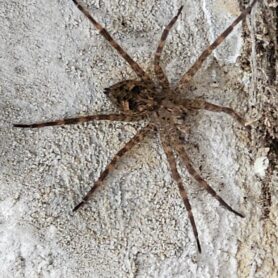

 Apr 14, 2024
 Apr 14, 2024
 Cookeville ,