Login
Login Register
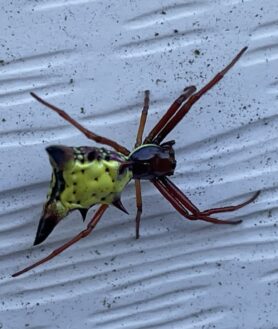
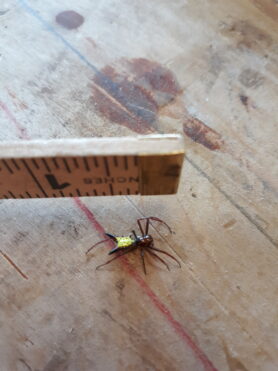
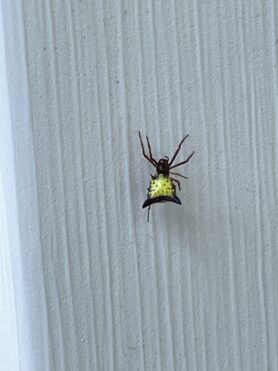
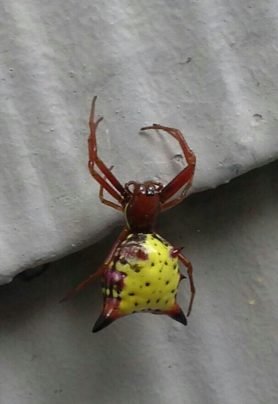 The spider species Micrathena sagittata, commonly known as Arrow-shaped Micrathena, belongs to the genus Micrathena, in the family Araneidae. Micrathena sagittata spiders have been sighted
 Taxonomic Hierarchy
- Kingdom: Animalia
- Phylum: Arthropoda
- Class: Arachnida
- Order: Araneae
- Suborder: Araneomorphae
- Family: Araneidae
- Genus: Micrathena
- Species: Micrathena sagittata
Common Name (AAS )
)
Arrow-shaped Micrathena
Other Common Names
Arrow Spider, Arrowhead Orb-weaver
Author
Charles Athanase Walckenaer, 1841
Primary Colors
Sightings Overview
There have been 21 confirmed sightings of Micrathena sagittata (Arrow-shaped Micrathena), with the most recent sighting submitted on March 11, 2024 by Spider ID member carlad. The detailed statistics below may not utilize the complete dataset of 21 sightings because of certain Micrathena sagittata sightings reporting incomplete data.
- Web: 52% of the time, Micrathena sagittata spiders are sighted in a spider web (Sample size: 21)
- Sex: 3 female and 0 male.
- Environment: Micrathena sagittata has been sighted 24 times outdoors, and 0 times indoors.
- Outdoors: Man-made structure (12). Low foliage (4). High foliage (6). Freshwater river, lake, stream (1). Forest (1).
Location and Range
Micrathena sagittata (Arrow-shaped Micrathena) has been sighted in the following countries: United States.
Micrathena sagittata has also been sighted in the following states: Alabama, Georgia, Kentucky, Louisiana, Maine, Massachusetts, Missouri, New Hampshire, New York, Ohio, Pennsylvania, South Carolina, South Dakota, Virginia, West Virginia, Wisconsin.
Seasonality
Micrathena sagittata has been primarily sighted during the month of August.
- January:
- February:
- March:
- April:
- May: 2
- June: 1
- July: 3
- August: 8
- September: 4
- October: 3
- November:
- December:
Additional Remarks
- Herbert Levi (1985) wrote that Micrathena bite their prey first and then wrap it in silk, which is the opposite of most types of orbweaving spider. However, Richard Bradley (2013) reported that Micrathena sagittata doesn’t wrap its prey at all.


 Mar 11, 2024
 Jul 12, 2024
 Athens,