Login
Login Register
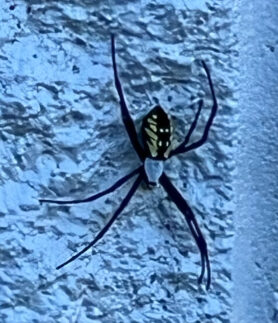
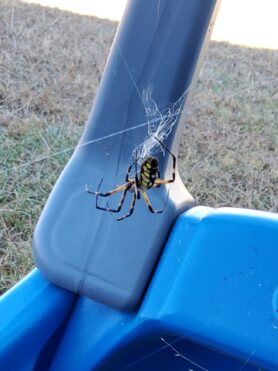
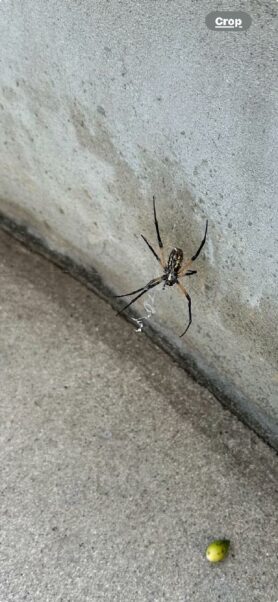
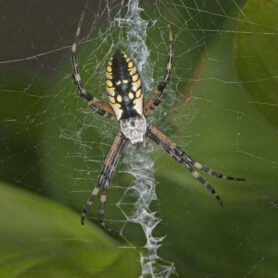
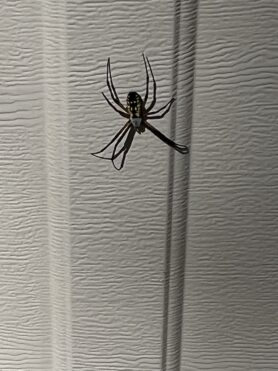
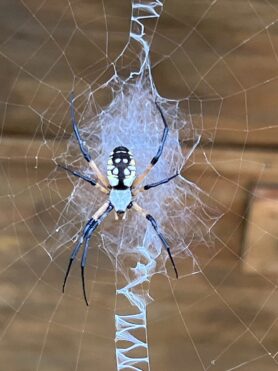
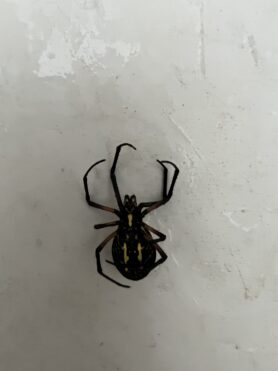
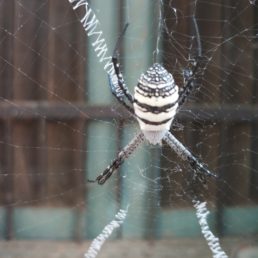
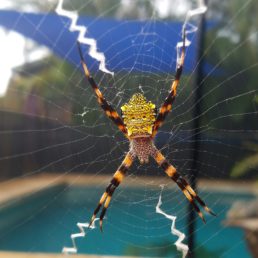
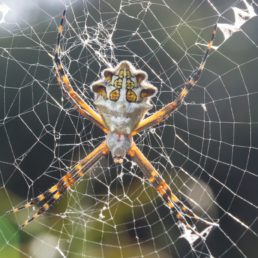
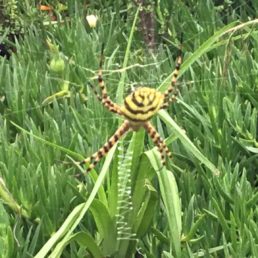
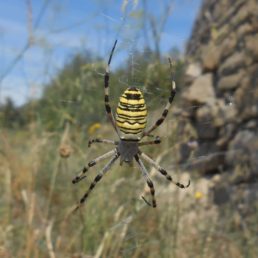
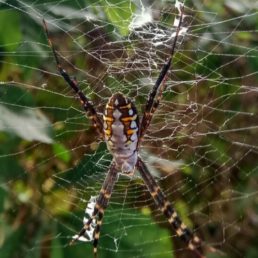
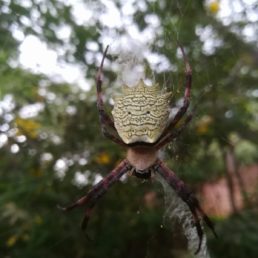
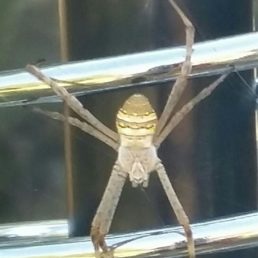
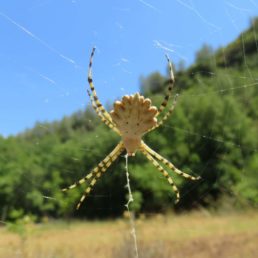
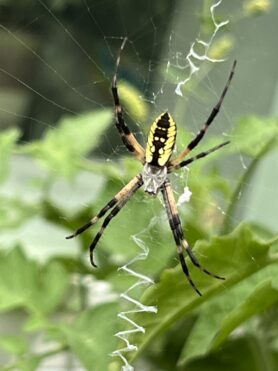
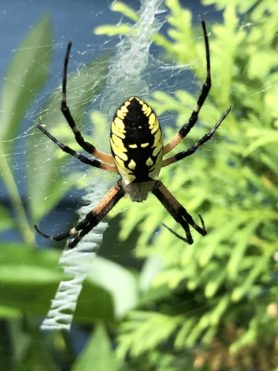 The spider species Argiope aurantia, commonly known as Black and Yellow Garden Spider, belongs to the genus Argiope, in the family Araneidae. Argiope aurantia spiders have been sighted
 Taxonomic Hierarchy
- Kingdom: Animalia
- Phylum: Arthropoda
- Class: Arachnida
- Order: Araneae
- Suborder: Araneomorphae
- Family: Araneidae
- Genus: Argiope
- Species: Argiope aurantia
Common Name (AAS )
)
Yellow Garden Spider
Other Common Names
Black and Yellow Garden Spider, Black and Yellow Argiope, Garden Spider, Writing Spider, Golden Orb-weaver
Author
Hippolyte Lucas, 1833
Primary Colors
Sightings Overview
There have been 149 confirmed sightings of Argiope aurantia (Black and Yellow Garden Spider), with the most recent sighting submitted on April 20, 2024 by Spider ID member reegen. The detailed statistics below may not utilize the complete dataset of 149 sightings because of certain Argiope aurantia sightings reporting incomplete data.
- Web: 80% of the time, Argiope aurantia spiders are sighted in a spider web (Sample size: 149)
- Sex: 28 female and 3 male.
- Environment: Argiope aurantia has been sighted 168 times outdoors, and 8 times indoors.
- Outdoors: Man-made structure (98). On flower (5). Low foliage (41). High foliage (6). Ground layer (8). Freshwater river, lake, stream (2). Open field, pasture, grassland (5). Forest (3).
Location and Range
Argiope aurantia (Black and Yellow Garden Spider) has been sighted in the following countries: Canada, Mexico, United States.
Argiope aurantia has also been sighted in the following states: Alabama, Arkansas, California, Connecticut, Delaware, Florida, Georgia, Illinois, Indiana, Kansas, Kentucky, Louisiana, Maine, Maryland, Massachusetts, Michigan, Minnesota, Mississippi, Missouri, Montana, Nebraska, New York, North Carolina, Ohio, Oklahoma, Oregon, Pennsylvania, Rhode Island, South Carolina, South Dakota, Tennessee, Texas, Virginia, West Virginia, Wisconsin.
Seasonality
Argiope aurantia has been primarily sighted during the month of September.
- January:
- February: 1
- March: 1
- April: 1
- May: 9
- June: 7
- July: 11
- August: 38
- September: 45
- October: 32
- November: 2
- December: 2
Additional Remarks
- One of the largest members of the orb weaver family Araneidae in North America. Because of its size and bright coloration, it’s one of the most commonly known and recognized by observers.
- This species takes most of its potty breaks at night, and often leaves its web to do so (Curtis & Carrel 2000).
- As a defensive strategy, this spider may rapidly shake and vibrate in its web; the shaking blurs the spider and makes it appear bigger than it really is.
- Egg sacs are made of tough brown silk, are spherical or pear-shaped, about 20-25mm in diameter, and can contain 400 to 1,200 yellowish eggs, sometimes even more. Females can make 3 or 4 of them, roughly one or two weeks apart. Spiderlings (baby spiders) overwinter inside the egg sac and emerge in the spring.

 Apr 20, 2024
 Aug 5, 2023
 Billings ,