Login
Login Register
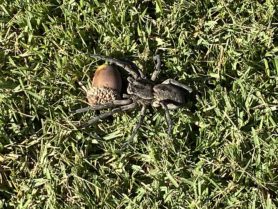
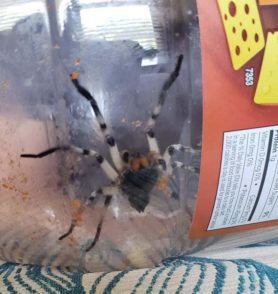
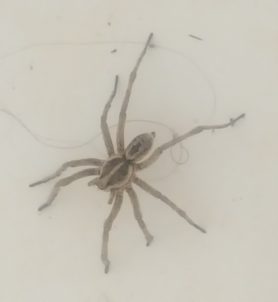
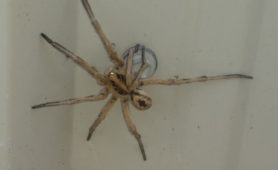
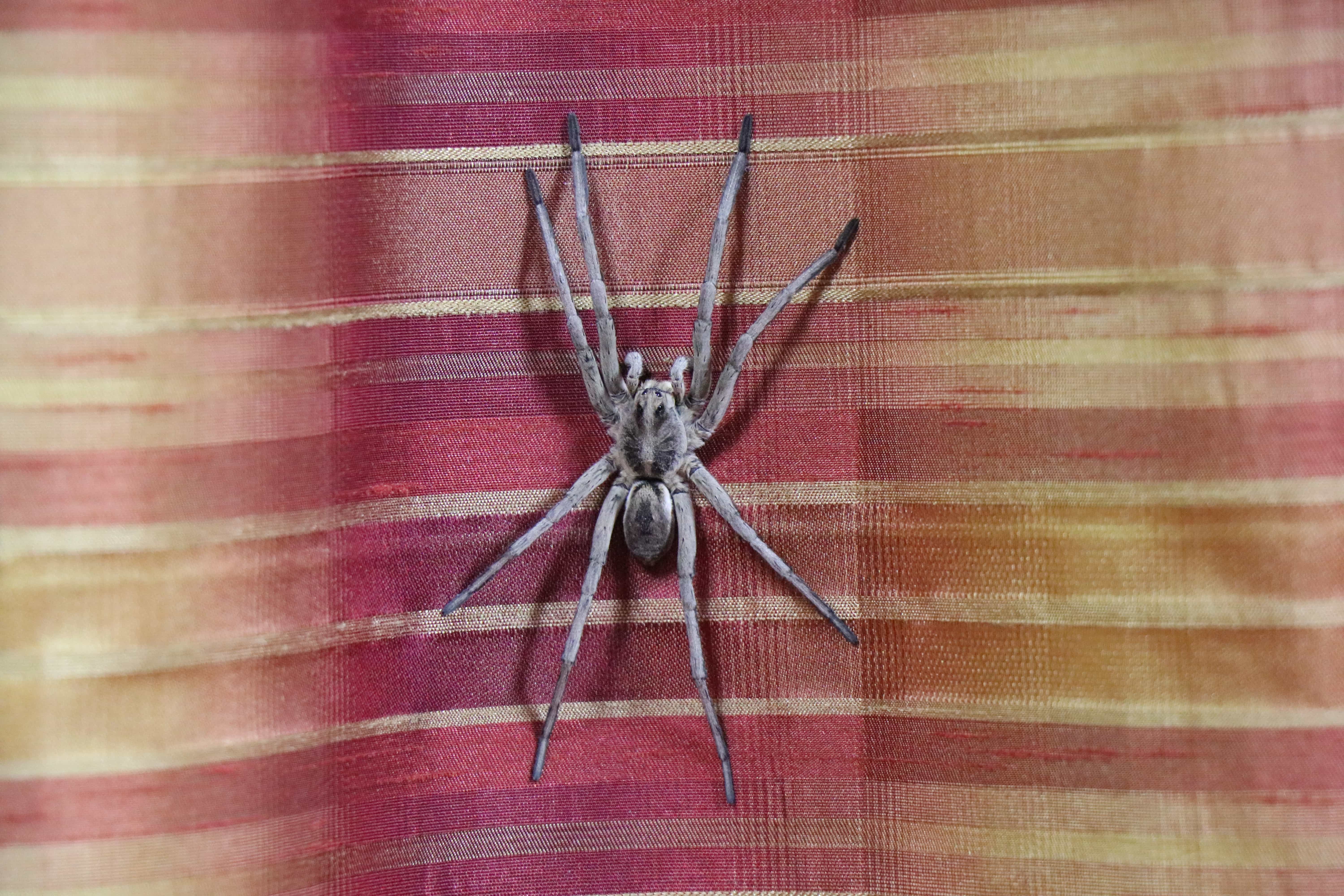
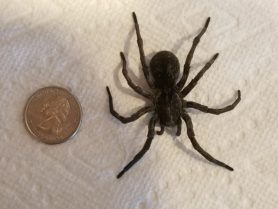
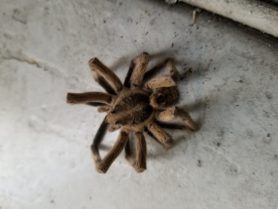
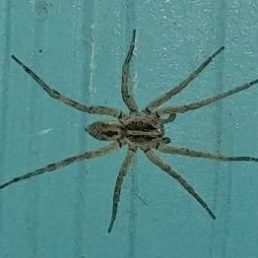
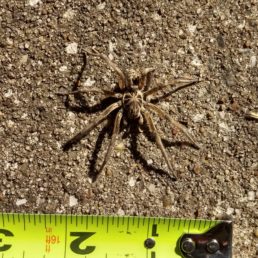
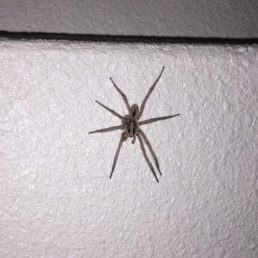
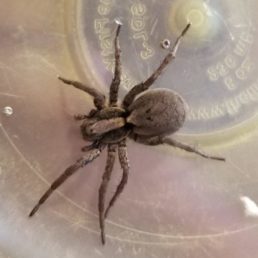
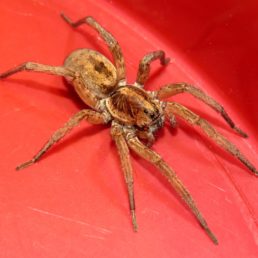
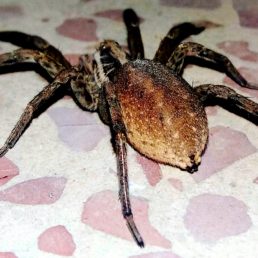
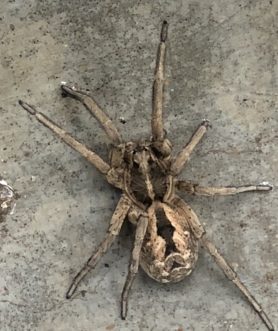 The spider species Hogna carolinensis, commonly known as Carolina Wolf Spider, belongs to the genus Hogna, in the family Lycosidae. Hogna carolinensis spiders have been sighted
 Taxonomic Hierarchy
- Kingdom: Animalia
- Phylum: Arthropoda
- Class: Arachnida
- Order: Araneae
- Suborder: Araneomorphae
- Family: Lycosidae
- Genus: Hogna
- Species: Hogna carolinensis
Other Common Names
Carolina Wolf Spider, Wolf Spider
Author
Charles Athanase Walckenaer, 1805
Primary Colors
Sightings Overview
There have been 17 confirmed sightings of Hogna carolinensis (Carolina Wolf Spider), with the most recent sighting submitted on February 22, 2020 by Spider ID member livingroomg3. The detailed statistics below may not utilize the complete dataset of 17 sightings because of certain Hogna carolinensis sightings reporting incomplete data.
- Web: 6% of the time, Hogna carolinensis spiders are sighted in a spider web (Sample size: 17)
- Sex: 1 female and 2 male.
- Environment: Hogna carolinensis has been sighted 16 times outdoors, and 5 times indoors.
- Outdoors: Man-made structure (7). Low foliage (1). Ground layer (6). Desert area (2).
Location and Range
Hogna carolinensis (Carolina Wolf Spider) has been sighted in the following countries: United States.
Hogna carolinensis has also been sighted in the following states: Arizona, Arkansas, Colorado, Kansas, Mississippi, New Mexico, Oklahoma, Texas, Utah, Wyoming.
Seasonality
Hogna carolinensis has been primarily sighted during the month of April.
- January:
- February: 1
- March: 1
- April: 3
- May: 3
- June: 2
- July:
- August: 1
- September: 3
- October: 3
- November:
- December:
Additional Remarks
- Largest species of “wolf spider” in North America.
- Underside of body typically all black; leg joints also usually black underneath.
- Chelicerae (jaws) often covered in orange or yellow hair.
- Females usually creates egg sac in the spring, carries it around attached to her spinnerets, and babies emerge in summer and ride on top of the mother until their next molt, after which they disperse. Brood size averages about 100-150 eggs.
- Spider may live in a silk-lined burrow with a turret of silk and grass (or other debris) at the entrance. Can be 5 or 6 inches deep.
- Species usually lives more than one year, so adults can typically be found at any time of year.
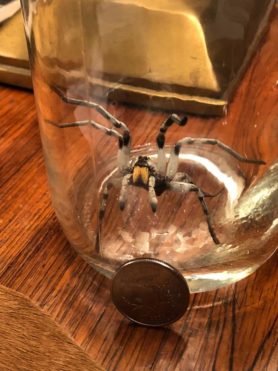

 Feb 22, 2020
 Sep 2, 2019

 Evergreen,